Magic Marc Productions Blog

Magic Marc Productions

I am an independent concert, music and event promoter based in the Minneapolis / Saint Paul, Minnesota area.

I am interested in creating unique, one of a kind, once in a lifetime, never to be forgotten events!

I am open to all ideas, suggestions, and comments for any kind of artistic endeavor.

Please feel free to email me with your thoughts.

Thank you.

Marc Evan Percansky

marc@magicmarcproductions.com

Filtering by Category: Film,Art

BOB DYLAN AS FILMMAKER - NO TIME TO THINK

MICHAEL GLOVER SMITH
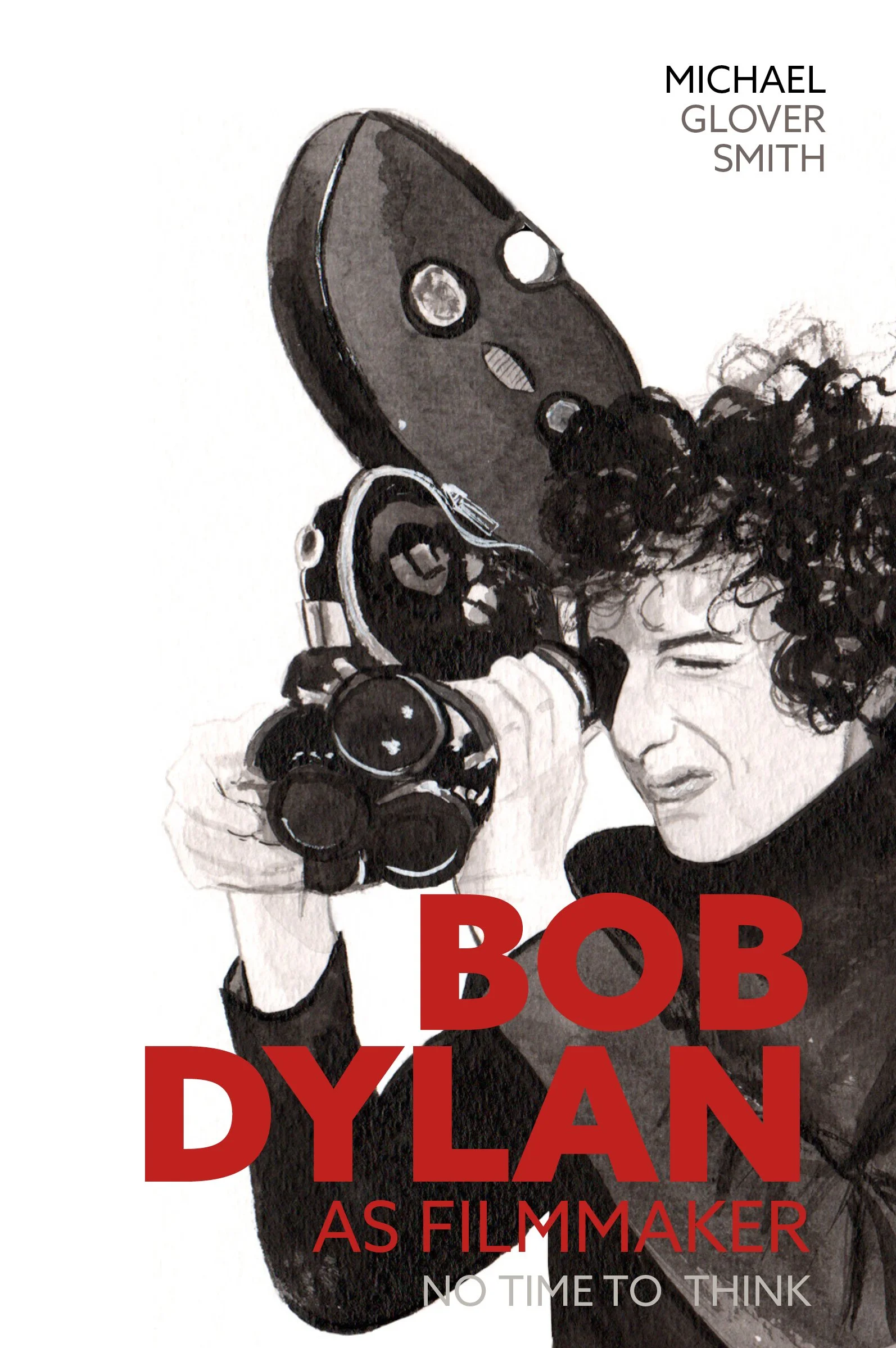
MICHAEL

GLOVER

SMITH

BOB DYLAN

AS FILMMAKER

NO TIME TO THINK 

Praise 1

'Michael Glover Smith's Bob Dylan as Filmmaker is the most compelling

reconsideration of Bob Dylan's work as a filmmaker written to date. Building

on previous analyses of Dylan's films, Smith combines his own experiences as a

filmmaker with his extensive research and deft analysis of Dylan's films to prove

how Dylan's process is similar regardless of the genre he creates in - grounded in

tradition, innovative, and true to his artistic vision. In this way, Smith successfully

challenges the paradigm that Dylan failed as a filmmaker by methodically 

chronicling the films that influenced Dylan and how those films shaped the  movies

Dylan made. Smith's approach positions Dylan as an artist working in the medium

of film rather than, as he has been previously understood, a musician making

movies. Bob Dylan as Filmmaker: No Time to Think advances the conversation of 

Dylan as an holistic artist and is an essential addition to anyone's Dylan library.'

Erin C. Callahan, author of The Politics and Power of 

Bob Dylan's Live Performances

'Despite the vast literature on Bob Dylan, his work as a filmmaker remains

critically underexplored. Michael Glover Smith, himself, an innovative and 

thought-provoking filmmaker, remedies this gap with a perceptive and rigorously

informed study of Dylan's cinematic output...Insightful, unique, and long

overdue, this book is an essential addition to Dylan's studies.'

Andrew Muir, author of The True Performing of It: Bob Dylan and

William Shakespeare

'This is an excellent read that shines a light on an underappreciated aspect of Bob

Dylan's creativity, which reflectively also illuminates the rest of his work.'

Laura Tenschert, host of the Definitely Dylan podcast

'I didn't ask to be dubbed the 'Dean of Dylanologists'-it was the unintended

byproduct of my deep, intense study of the work of Bob Dylan. I've long told

anyone who will listen that Dylan's films and interest in film are essential to

gaining a better understanding of his art. In an era of performative hot takes,

I recognize a kindred spirit in Michael Glover Smith. Bob Dylan as Filmmaker

reflects that rare combination of the director's eye and the curator's exactitude (the

appendices are stupendous). Bob Dylan is already studied like Shakespeare and

Smith's book is a foundational text on Dylan and cinema.'

Scott Warmuth, writer and disc jockey

'I can't wait for everyone else to read this brilliant, insightful, engaging, 

and fascinating book.'

Matthew Ingate, author of Together Through Life: 

My Never Ending Tour with Bob Dylan

Praise 2

'From the influence of everyone from John Ford to Rainer Werner Fassbinder to

his own fascinating forays into filmmaking, Bob Dylan's deep and abiding love

of cinema is a fascinating prism through which to contemplate his kaleidoscopic

career. In his wonderful new overview Bob Dylan As Filmmaker: No Time To Think,

Michael Glover Smith takes us on an immersive journey through the duality

between Dylan's music and the screen imagery that clearly preoccupies so much of

his mind. A delightful and rigorous read, and a crucial contribution to the canon

of Dylan literature.'

Elizabeth Nelson, singer-songwriter for garage-punk band the Paranoid Style, 

and a regular contributor to the Ringer, the New York Times Magazine, and

Pitchfork, among others

'Even among fans, Bob Dylan's work as a filmmaker is easy to mock or ignore. In

Bob Dylan as Filmmaker: No Time To Think, Michael Glover Smith persuasively 

defend's Dylan's artistic vision (if not always his acting). Through meticulous

analysis augmented by his own original research in the Dylan archives. Smith

explains what the movies mean and what other films Dylan drew inspiration from.

I'll give it the highest praise possible: It made me want to watch Renaldo and

Clara again.'

Ray Padgett, author of Pledging My Time: Conversations with 

Bob Dylan Band Members 

'As lively as it is insightful, Bob Dylan as Filmmaker: No Time to Think is a 

sunbeam-lit account of Bob Dylan as filmmaker-informed, thoroughgoing,

prodigiously researched, ingeniously creative, and serious as pericarditis. A totally 

engrossing read.'

Eric Lott, author of Love and Theft: Blackface Minstrelsy and the 

American Working Class

'In Bob Dylan as Filmmaker: No Time to Think, director Michael Glover Smith

explores Dylan's cinematic side, arguing it's every bit as groundbreaking as his

music. From Eat the Document to A Complete Unknown, Smith connects the dots

between Dylan's films, lyrics, and visual art with sharp insight and rare material 

from the Bob Dylan Center® archives. Smart, passionate, and full of surprises-

this is Dylan through a whole new lens. And this book works so well I think even 

the man himself will enjoy it! 

Marc Percansky, co-author of Bob Dylan in Minnesota: Troubadour Tales from 

Duluth, Hibbing and Dinkytown

A deep dive into one of the most overlooked - and fascinating - sides of the 2016 Nobel Prize in Literature winner: Bob Dylan, the filmmaker. While his music and lyrics have been studied endlessly, his work behind (and in front of) the camera remains largely unexplored. No other book has taken this angle, and with Dylan's legend still growing, the audience is more than ready for a bold new take.

Bob Dylan as Filmmaker, the first book of its kind, opens exciting new ways to think about the artistry of Bob Dylan.  It offers a captivating exploration into movies that, according to Michael, showcase Bob Dylan not just as a subject, but as the primary author. These include Eat the Document—a short, experimental television film shot in 1966 and released in 1972; the sprawling, genre-blurring epic Renaldo and Clara (1978), both directed by Dylan himself; and the darkly surreal Masked and Anonymous (2003), directed by Larry Charles but co-written by and starring Dylan. Bob Dylan as Filmmaker explores what these movies reveal about “how it feels” to be Bob Dylan during three defining eras of his career: the revolutionary 1960s, the introspective 1970s, and the enigmatic early 2000s. Just as crucially, they illuminate Dylan’s remarkable instinct for using film not merely as a medium, but as a deeply personal mode of expression.

The book also provides an essential survey of Dylan’s most recent movie projects, including those by other directors, in which Dylan’s influence is less overt but no less powerful. Here, Michael argues that Dylan operates as a kind of “invisible co-author”: in Martin Scorsese’s Rolling Thunder Revue (2019), where Dylan appears as a slippery, self-mythologizing interviewee; Alma Har’el’s haunting Shadow Kingdom (2021), a stylized livestream performance; and James Mangold’s A Complete Unknown (2024), the Timothée Chalamet-led biopic shaped in part by Dylan’s behind-the-scenes “script approval.”
https://mcnidderandgrace.com/michaelglover-smith-book1

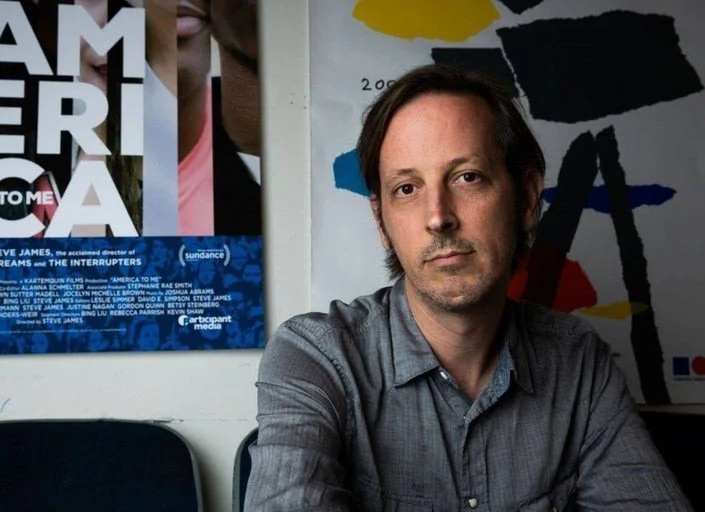
Michael Glover Smith is a Chicago-based filmmaker/writer, author, and teacher. Filming for Michael’s most recent film Hekla, starring Elizabeth Stam, has recently finished – the festival premiere will be in early 2026.

Michael is also the director of four award-winning feature films, the most recent of which, Relative, stars Wendy Robie (Twin Peaks) and is distributed by Music Box Films. It was the 23rd highest-grossing movie in the U.S. in its first week of release in 2022.

His previous book, Flickering Empire: How Chicago Invented the U.S. Film Industry (co-written with Adam Selzer), was published by Columbia University Press to acclaim in 2015. He has seen Bob Dylan 100 times in concert.

https://mcnidderandgrace.com/michaelglover-smith1

https://www.michaelgloversmith.com/books

McNIDDER &

GRACE

Published 2 March 2026

Paperback 

GBP £16.99 / USD $22.95

ISBN: 9780857162991

52295

9 780857 162991

www.mcnidderandgrace.com

BOB DYLAN: FACE VALUE AND BEYOND EXHIBITION ADDS NEVER-BEFORE-SEEN ITEMS FROM BLOOD ON THE TRACKS ERA


BOB DYLAN CENTER TULSA, OK

FOR IMMEDIATE RELEASE

Contacts:

Larry Jenkins – Larry.Jenkins@bobdylanarchive.com

Lacy Wulfers – lmw3211@utulsa.edu

BOB DYLAN: FACE VALUE AND BEYOND EXHIBITION ADDS
NEVER-BEFORE-SEEN ITEMS FROM BLOOD ON THE TRACKS ERA

The Tulsa exhibition focuses on Dylan’s visual art, featuring his Face Value portrait series, along with historic lyric manuscripts and ephemera from The Bob Dylan Archive® collection


TULSA, Okla. (Oct. 9, 2019) — The Bob Dylan Center℠ has updated its exhibition, Bob Dylan: Face Value and Beyond, with never-before-seen items from Dylan’s mid-1970s period that produced the renowned album Blood On The Tracks and the Rolling Thunder Revue tour.

The exhibition, at Tulsa’s Gilcrease Museum of American Art, also has been extended through Jan. 5, 2020.

Kevin Odegard ©️ 2012

Kevin Odegard ©️ 2012

In addition to its exploration of Dylan’s visual art, Face Value and Beyond features the first public display of the “blue notebook” in which Dylan began composing the lyrics that became Blood On The Tracks, released in 1975. The “blue notebook” now is accompanied by additional material from the era, including items recently donated to the archive by Kevin Odegard, one of the Minnesota-based musicians who backed Dylan on recording sessions for Blood On The Tracks.

Odegard donated the Martin acoustic guitar he played on “Tangled Up In Blue” to the archive, among many other items related to his recording sessions with Dylan.

“Playing on ‘Tangled Up In Blue’ was the greatest thrill of my career,” said Odegard, who wrote A Simple Twist of Fate: Bob Dylan and the Making of Blood on the Tracks with rock journalist Andy Gill. “My second greatest thrill is sharing that guitar with generations to come.”

Aside from presenting the many facets of Dylan’s artistry, the exhibition also serves as a sneak preview of the Bob Dylan Center, currently under development in the Tulsa Arts District.

“We have no plans to exhibit these archival items again before the Bob Dylan Center opens in 2021,” says Steve Higgins, managing director of the American Song Archives, which operates the Dylan archive as well as the Woody Guthrie Center. “Even if you’ve already seen Face Value and Beyond, the new material is well worth a return visit.”

The exhibition, which opened in May, includes the first regional showing of Dylan’s renowned Face Value portrait series, as well as drawings, filmed performances, writings, personal effects and ephemera.

One of the most important cultural figures of our time, Bob Dylan has been creating visual art since the 1960s, but only began exhibiting his work publicly in 2007. The 12 pastel portraits in Face Value represent Bob Dylan’s first public foray into portraiture, having debuted at London’s National Portrait Gallery in 2013 and shown in the U.S. only briefly in 2015. The exhibition also premieres drawings and sketches from The Bob Dylan Archive® collection, including two recently unearthed Dylan sketchbooks from 1970 and a series of never-before-seen artworks originally created by Dylan for his 1973 book Writings and Drawings, only a fraction of which appeared in that volume or have ever been reproduced in any form.

Bob Dylan: Face Value and Beyond also features archival manuscripts and objects exclusive to The Bob Dylan Archive® collection, including handwritten lyrics to some of the artist’s best-known songs that reveal a glimpse into Dylan’s creative process through the artist’s many visible edits. The exhibition includes numerous elements spanning five decades, including two silent Andy Warhol–directed “Screen Tests,” of Dylan, the leather jacket worn by the artist at the Newport Folk Festival in 1965 when he famously unveiled his new electric sound, and a wallet and address book from the mid-1960s that contain a number of personal references and effects.

Bob Dylan: Face Value and Beyond runs through Jan. 5. Museum hours are 10 a.m. to 5 p.m., Tuesday through Sunday. For more information, visit gilcrease.org.

# # #

About The Bob Dylan Center℠
To be anchored by a permanent exhibit on the life and work of Bob Dylan, The Bob Dylan Center is committed to exploring the myriad forms of creativity that enrich the world around us. When it opens in the Tulsa Arts District, the Center will serve to educate, motivate and inspire visitors to engage their own capacity as creators. Through exhibits, public programs, performances, lectures, and publications, The Center aims to foster a conversation about the role of creativity in our lives.

As the primary public venue for The Bob Dylan Archive® collection, the Center will curate and exhibit a priceless collection of more than 100,000 items spanning Dylan’s career, including handwritten manuscripts, notebooks, and correspondence; films, videos, photographs, and artwork; memorabilia and ephemera; personal documents and effects; unreleased studio and concert recordings; musical instruments, and many other elements.

About Gilcrease Museum
The Thomas Gilcrease Institute of American History and Art, commonly known as Gilcrease Museum, has a
400,000-item collection of American art and artifacts as vast as the American experience and is world renowned for the preservation and study of American art and history. Additionally, The Helmerich Center for American Research on the museum’s campus houses a vast archival collection that includes over 100,000 rare books, documents, maps and unpublished material related to the history of the North American continent. The museum is owned by the City of Tulsa, which has partnered with The University of Tulsa to steward the museum. To learn more and view the current exhibition schedule, please visit gilcrease.org.

About The Bob Dylan Archive® Collection
Composed of more than 100,000 items spanning nearly 60 years of Bob Dylan’s unique artistry, singular career, and worldwide cultural significance, The Bob Dylan Archive collection includes decades of never-before-seen handwritten manuscripts, notebooks and correspondence; films, videos, photographs and artwork; memorabilia and ephemera; personal documents and effects; unreleased studio and concert recordings; musical instruments, and many other items. The collection was acquired in 2016 by the George Kaiser Family Foundation and The University of Tulsa and is housed at the university’s Helmerich Center for American Research at Gilcrease Museum in Tulsa. The Bob Dylan Archive eventually will be exhibited to the public at the future Bob Dylan Center℠ in the city’s flourishing Tulsa Arts District. For more information, visit bobdylanarchive.com.

About Bob Dylan

Bob Dylan is generally regarded as one of the world’s most influential and groundbreaking artists. In the decades since he first burst into the public’s consciousness via New York City’s Greenwich Village folk music scene in the early 1960s, Bob Dylan has sold more than 125 million records and amassed a singular body of work that includes some of the greatest and most popular songs the world has ever known. He continues to traverse the globe each year, performing nearly 100 concerts annually in front of audiences who embrace his new material with the same passion as his classic output. In recent years, his work as an author and visual artist has further burnished his popularity and acclaim; a worldwide best-selling memoir, Chronicles Vol. 1, spent 19 weeks on the New York Times Best Seller List, in 2004, and several major exhibitions of his paintings and iron gates have been shown in recent years at some of the world’s most prestigious museums and galleries.

Bob Dylan’s contributions to our culture have been recognized with numerous honors and accolades. In
December 2016, he was awarded the Nobel Prize for Literature by the Swedish Academy “for having created new poetic expressions within the great American song tradition.” In 2012, he was awarded America’s highest civilian honor, the Presidential Medal of Freedom, by President Barack Obama. In addition to winning 11 Grammy Awards, Dylan has achieved six entries in the Grammy Hall of Fame, which honors recordings of “qualitative or historical significance” at least 25 years old. For more information, visit bobdylan.com.

Bob Dylan Center • 203 North Main Street, Suite 216 • Tulsa, Oklahoma 74103

BOB DYLAN: FACE VALUE AND BEYOND TO INCLUDE NEVER-BEFORE-SEEN ITEMS FROM BLOOD ON THE TRACKS ERA

BOB DYLAN CENTER TULSA, OK

FOR IMMEDIATE RELEASE

Contacts:

Larry Jenkins – Larry.Jenkins@bobdylanarchive.com

Lacy Wulfers – lmw3211@utulsa.edu

BOB DYLAN: FACE VALUE AND BEYOND TO INCLUDE NEVER-BEFORE-SEEN ITEMS FROM BLOOD ON THE TRACKS ERA

Tulsa exhibition focuses on Dylan’s visual art, including his Face Value portrait series, along with historic lyric manuscripts and ephemera from The Bob Dylan Archive® collection


TULSA, Okla. (Oct. 1, 2019)—Beginning Oct. 8, The Bob Dylan Center℠ will update its exhibition, Bob Dylan: Face Value and Beyond, with never-before-seen items from Dylan’s mid-1970s period that produced the renowned album Blood on the Tracks and the Rolling Thunder Revue tour.

The exhibition, at Tulsa’s Gilcrease Museum of American Art, has been extended through Jan. 5, 2020.

In addition to its exploration of Dylan’s visual art, Face Value and Beyond features the first public display of the “blue notebook” in which Dylan began composing the lyrics that became Blood on the Tracks, released in 1975. Beginning Oct. 8, the “blue notebook” will be accompanied by additional material from the era, including items recently donated to the archive by musician Kevin Odegard.

One of the Minnesota-based musicians who backed Dylan on recording sessions for Blood on the Tracks, Odegard donated the Martin acoustic guitar he played on “Tangled Up in Blue” to the archive, among many other items related to those sessions.

“Playing on ‘Tangled Up in Blue’ was the greatest thrill of my career,” said Odegard, who wrote A Simple Twist of Fate: Bob Dylan and the Making of Blood on the Tracks with rock journalist Andy Gill. “My second greatest thrill is sharing that guitar with generations to come.”

Aside from presenting the many facets of Dylan’s artistry, the exhibition also serves as a sneak preview of the Bob Dylan Center, currently under development in the Tulsa Arts District.

“We have no plans to exhibit these archival items again before the Bob Dylan Center opens in 2021,” says Steve Higgins, managing director of the American Song Archives, which operates the Dylan archive as well as the Woody Guthrie Center. “Even if you’ve already seen Face Value and Beyond, the new material will be well worth a return visit.”

The exhibition, which opened in May, includes the first regional showing of Dylan’s renowned Face Value portrait series, as well as drawings, filmed performances, writings, personal effects and ephemera.

One of the most important cultural figures of our time, Bob Dylan has been creating visual art since the 1960s, but only began exhibiting his work publicly in 2007. The 12 pastel portraits in Face Value represent Bob Dylan’s first public foray into portraiture, having debuted at London’s National Portrait Gallery in 2013 and shown in the U.S. only briefly in 2015. The exhibition also premieres drawings and sketches from The Bob Dylan Archive® collection, including two recently unearthed Dylan sketchbooks from 1970 and a series of never-before-seen artworks originally created by Dylan for his 1973 book Writings and Drawings, only a fraction of which appeared in that volume or have ever been reproduced in any form.

Bob Dylan: Face Value and Beyond also features archival manuscripts and objects exclusive to The Bob Dylan Archive® collection, including handwritten lyrics to some of the artist’s best-known songs that reveal a glimpse into Dylan’s creative process through the artist’s many visible edits. The exhibition includes numerous elements spanning five decades, including two silent Andy Warhol–directed “Screen Tests,” of Dylan, the leather jacket worn by the artist at the Newport Folk Festival in 1965 when he famously unveiled his new electric sound, and a wallet and address book from the mid-1960s that contain a number of personal references and effects.

Bob Dylan: Face Value and Beyond runs through Jan. 5. Museum hours are 10 a.m. to 5 p.m., Tuesday through Sunday. For more information, visit gilcrease.org.

# # #

About The Bob Dylan Center℠
To be anchored by a permanent exhibit on the life and work of Bob Dylan, The Bob Dylan Center is committed to exploring the myriad forms of creativity that enrich the world around us. When it opens in the Tulsa Arts District, the Center will serve to educate, motivate and inspire visitors to engage their own capacity as creators. Through exhibits, public programs, performances, lectures, and publications, The Center aims to foster a conversation about the role of creativity in our lives.

As the primary public venue for The Bob Dylan Archive® collection, the Center will curate and exhibit a priceless collection of more than 100,000 items spanning Dylan’s career, including handwritten manuscripts, notebooks, and correspondence; films, videos, photographs, and artwork; memorabilia and ephemera; personal documents and effects; unreleased studio and concert recordings; musical instruments, and many other elements.

About Gilcrease Museum
The Thomas Gilcrease Institute of American History and Art, commonly known as Gilcrease Museum, has a
400,000-item collection of American art and artifacts as vast as the American experience and is world renowned for the preservation and study of American art and history. Additionally, The Helmerich Center for American Research on the museum’s campus houses a vast archival collection that includes over 100,000 rare books, documents, maps and unpublished material related to the history of the North American continent. The museum is owned by the City of Tulsa, which has partnered with The University of Tulsa to steward the museum. To learn more and view the current exhibition schedule, please visit gilcrease.org.

About The Bob Dylan Archive®
Composed of more than 100,000 items spanning nearly 60 years of Bob Dylan’s unique artistry, singular career, and worldwide cultural significance, The Bob Dylan Archive includes decades of never-before-seen handwritten manuscripts, notebooks and correspondence; films, videos, photographs and artwork; memorabilia and ephemera; personal documents and effects; unreleased studio and concert recordings; musical instruments, and many other items. The collection was acquired in 2016 by the George Kaiser Family Foundation and The University of Tulsa and is housed at the university’s Helmerich Center for American Research at Gilcrease Museum in Tulsa. The Bob Dylan Archive eventually will be exhibited to the public at the future Bob Dylan Center℠ in the city’s flourishing Tulsa Arts District. For more information, visit bobdylanarchive.com.

About Bob Dylan

Bob Dylan is generally regarded as one of the world’s most influential and groundbreaking artists. In the decades since he first burst into the public’s consciousness via New York City’s Greenwich Village folk music scene in the early 1960s, Bob Dylan has sold more than 125 million records and amassed a singular body of work that includes some of the greatest and most popular songs the world has ever known. He continues to traverse the globe each year, performing nearly 100 concerts annually in front of audiences who embrace his new material with the same passion as his classic output. In recent years, his work as an author and visual artist has further burnished his popularity and acclaim; a worldwide best-selling memoir, Chronicles Vol. 1, spent 19 weeks on the New York Times Best Seller List, in 2004, and several major exhibitions of his paintings and iron gates have been shown in recent years at some of the world’s most prestigious museums and galleries.

Bob Dylan’s contributions to our culture have been recognized with numerous honors and accolades. In December 2016, he was awarded the Nobel Prize for Literature by the Swedish Academy “for having created new poetic expressions within the great American song tradition.” In 2012, he was awarded America’s highest civilian honor, the Presidential Medal of Freedom, by President Barack Obama. In addition to winning 11 Grammy Awards, Dylan has achieved six entries in the Grammy Hall of Fame, which honors recordings of “qualitative or historical significance” at least 25 years old.

Bob Dylan Center • 203 North Main Street, Suite 216 • Tulsa, Oklahoma 74103

Copyright © 2010 - 2026  Magic Marc Productions | All Rights Reserved | Privacy Policy